
2026 luxury market and the scarcity premium
Share

If you’re shopping for a luxury home in Melbourne with a serious budget, you’ve probably noticed the homes you truly want can feel elusive. That’s the scarcity premium at work.
In Melbourne’s prestige suburbs, many of the best homes are held for decades, sometimes across generations. Owners value the lifestyle and privacy as much as the investment, and plenty don’t need to sell unless a genuinely compelling offer is put in front of them. Increasingly, families are also buying multi-generational properties, homes that can accommodate grown kids, grandparents, guests.
The luxury long-game
This end of the market is built for long chapters. People buy to live well now and hold well later. That’s why luxury can feel far removed from the general market. It isn’t driven by sentiment swings in the same way, because owners are often rate-insulated and focused on long-term wealth strategy.
Access to this market becomes part of the prestige. It’s not just what you can buy, it’s whether you’re in the right conversations with the right people when the right home quietly becomes available.

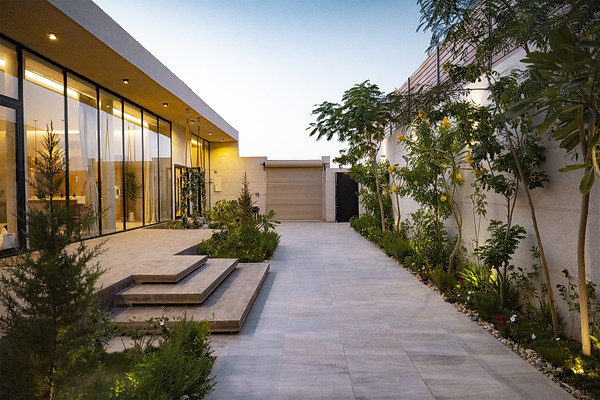
Luxury for sale: 15 Finch Street, Malvern East
From where I sit, Melbourne luxury is shaped by three supply streams.
The first is the long-held prestige estate market. These are the landmark family homes and trophy landholdings. Scarcity is structural, and when one comes up, it’s rarely a casual transaction on either side.
Second is the blue-chip family home market in the best inner suburbs. Beautifully renovated period homes and sharp modern builds that sit close to schools, villages and parks.
This is often the most competitive market because it’s where lifestyle and practicality overlap: buyers want scale and quality, but they also want to be five minutes from the school gates.
The final category is premium new builds and luxury developments. This is the modern lane of prestige - architecture, finish, technology, security, and turnkey ease. Buyers snap up best-in-class new stock when it appears because it removes the uncertainty, wait time, and cost of a major renovation.
The setup for 2026
Mainstream Melbourne finished 2025 in better shape than it began. Prices lifted and confidence improved. As always, the prestige end was about consolidation and confidence-building, supported by a consistent run of high-quality transactions. Buyers played the long game, stayed engaged across the key prestige suburbs, and moved quickly when the suitable properties appeared.
And then there were the headline proof points. The off-market sale of Toorak’s Coonac estate, widely reported at $130 million-plus, was a reminder of Melbourne’s depth at the ultra-prime end. Beneath the headline, the day-to-day market saw steady multi-million-dollar trading in blue-chip pockets, especially for renovated family homes and premium new builds.

What I’m watching in 2026
I expect strategic growth, not speculative. After Melbourne’s mainstream market lifted through 2025, with Domain reporting house prices up 7.4% over the year to a record median of $1.11 million, the city is entering 2026 with momentum, but also with buyers who are thinking carefully about value and quality.
Looking ahead, KPMG is forecasting Melbourne house prices to rise 6.8% in 2026, with units up 7.3%. That tracks with what we are seeing at the top end: demand is there, but it’s selective.
Melbourne will keep working as a prestige market for the same reasons it always has: a deep pool of high-net-worth buyers locally, interstate and internationally, and structural scarcity of prime land in the suburbs that never fall out of favour, plus a history of stable, long-term capital growth.
Add the lifestyle side (schools, villages, the coast, the Peninsula, the cultural pull) and you end up with a market people want to participate in, not just invest in.
In stable conditions, the top end tends to behave in a very predictable way. High-quality property trades on fundamentals rather than speculation. When the home is genuinely rare and beautifully marketed, it finds its buyer and that’s what makes the Melbourne environment attractive for both buyers and sellers.

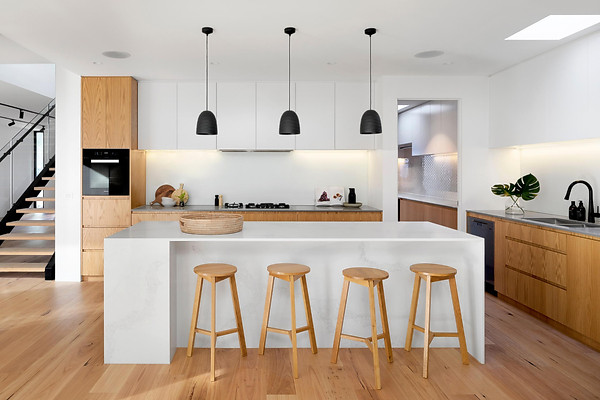
Luxury for sale: 5 Glover Court, Toorak
The places to watch
When people ask me where Melbourne’s prestige market really “lives”, I start with the obvious one: Toorak. It’s still the flagship, not just because it’s fashionable, but because the land is scarce and the calibre of property is hard to replicate and, in most cases, irreplaceable.
From there, South Yarra, Armadale, Malvern and Kooyong form the core of the traditional prestige belt, the places buyers gravitate to when they want strong architecture, great schooling, and amenity.
Hawthorn, Kew and Canterbury continue to attract family buyers chasing scale, gardens and long-term stability.
Then moving closer to the water, where Brighton anchors the bayside market, because that lifestyle pull doesn’t come and go with a cycle. And Albert Park and Middle Park sit in that tightly held city-fringe zone where proximity to the CBD and the beach is a rare combination, and supply never meets demand.
Then you’ve got the coastal favourites. Portsea and Sorrento are their own prestige ecosystem – oceans, golf, wineries, and a social scene that turns weekenders into forever homes.

Luxury for sale: 10 Port King Road, Portsea
The takeaway
Melbourne luxury is a long-game market, and that’s precisely why it holds its appeal. The best homes rarely come to market, and more buyers are planning for multi-generational living alongside wealth preservation.
That’s the scarcity premium and it’s what keeps Melbourne’s top end so investment-friendly, lifestyle-led, and desirable once you secure your piece.